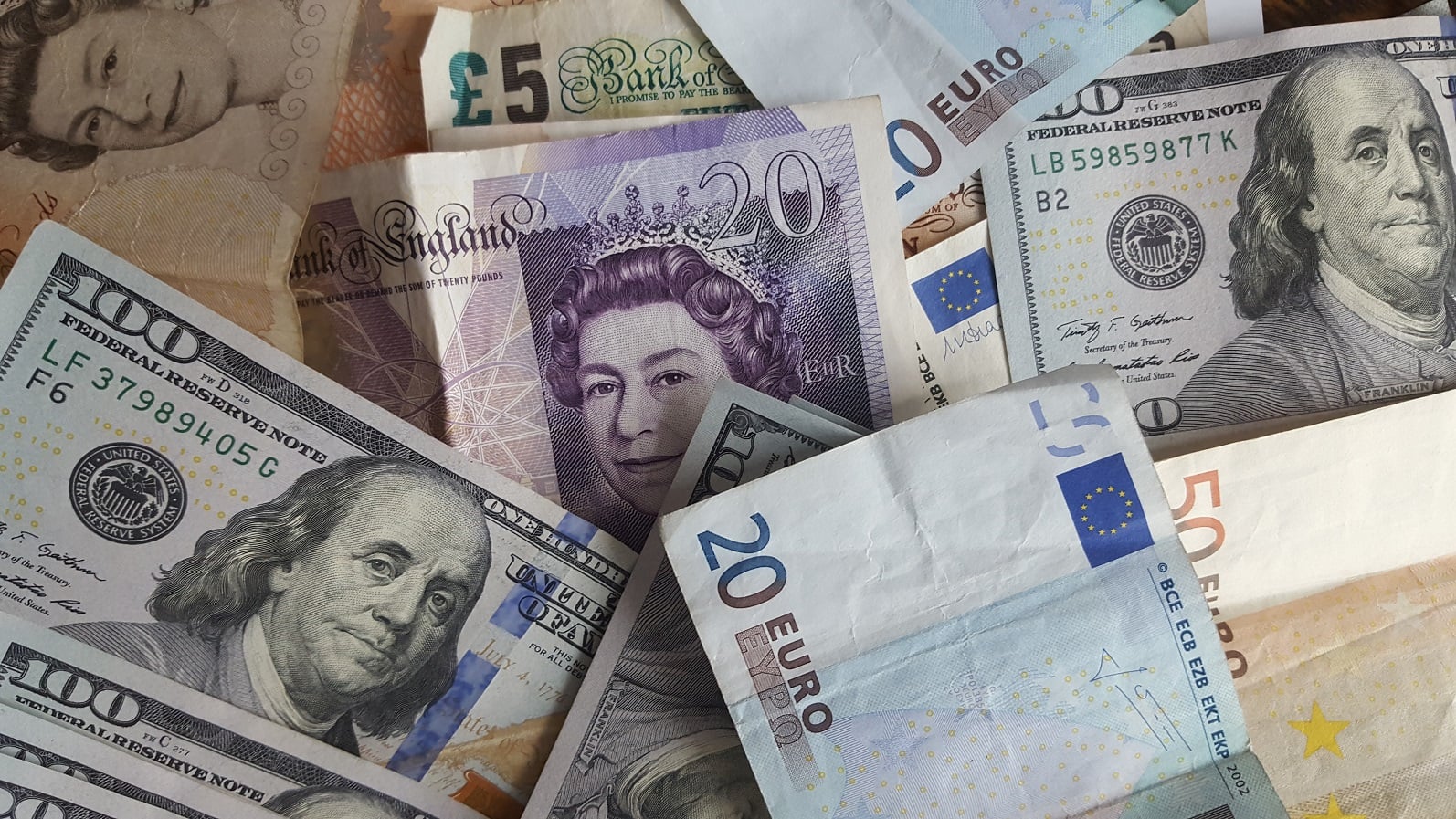
The Libyan dinar gained value at close of business tonight on the black-market foreign exchange to about LD 8.33 per dollar, up from yesterday’s LD 8.80, as the CBL continued its daily off-record media briefings in its attempt to drive the dinar down to below the LD 7 mark.
Briefing to Libyan media tonight anonymous CBL source said: "Central Bank Governor Naji Issa will break the back of the parallel (black) market tonight. A fourth shipment worth nearly one billion dollars is arriving this evening."
The source added: "The warning is directed specifically at currency hoarders. The cash you are hoarding will soon lose its value, because the amount that entered tonight alone is enough to meet local demand for months to come. Anyone holding dollars outside official channels after this moment will lose."
‘‘This massive amount, the CBL claimed, means that all branches of commercial banks and licensed exchange bureaux will have full coverage in hard currency starting from the date that Naji Issa will set for its launch. Do not pay your money in the black market; the dollar is now available at official rates and in abundance’’.
‘‘This enormous amount is many times greater than what was previously injected and is considered a direct message that the official exchange market will be flooded with liquidity within days, which threatens to drive the dollar price in the parallel market to an unprecedented low’’, the late evening briefing said.
Earlier in the day, the Central Bank of Libya briefed: ‘‘The Central Bank has decided to inject $1.5 billion for personal purposes as an initial payment, and the proposal will include medical treatment. To increase the amount of dollars injected, it is expected that the allocation for personal purposes will be raised to $4,000, and that payments for letters of credit will be increased to compensate for the shortage in supply and the citizen's need for goods and services.
This will take place after receiving the actual revenues for the month of April, which are expected to be $3 billion. There is a short-term action plan to gradually raise the value of the dinar to a level of 6.90 dinars to the dollar’’.
While in an earlier briefing today, the CBL said ‘‘The Central Bank's Board of Directors today approved important decisions, to be announced later, concerning the exchange rate, liquidity management, the mechanism for cash dollar sales, and the supply of large new quantities of foreign currency and Libyan dinars. These decisions will have a direct impact on the exchange rate.
''The Board also discussed exchange rate options in light of rising oil prices, improved revenues, and the consolidation of public spending, all of which are expected to strengthen the Libyan dinar in the coming weeks'', the briefing concluded.
.
Libyan dinar will be down to LD 7.90 before mid-April: CBL briefing
CBL leaks to local media: New currency arriving – Intention to pump US$ 2.5 in market on 1 April
CBL allows official foreign residents in Libya the use of e-Wallets – sets daily transfer categories
CBL Governor Issa reviews latest e-payment indicators – continued increases across multiple areas
CBL statistics reveal unprecedented growth in e-payment indicators from 2025 to 15 February 2026
e-payment transactions for 2025 increased by 186 percent to LD 389 billion: CBL
Latest CBL stats to November 2025 show significant growth in Libya’s electronic banking sector
Jumhuria bank launches Libya’s first e-payment service for petrol stations
Benghazi Security Directorate warns against charging any commission on e-payments
POS bank card use commissions reduced to less than 1 percent: CBL Governor
CBL reduces POS e-payment charges to 1 and 1.5 percent from 3.75 percent
CBL’s latest revenues and spending data reveals a dinar surplus but a dollar deficit
ATMs and e-payments in Libyan shops and businesses set to grow
Taxes can now be paid through e-payments: Finance Ministry
Libyan Islamic Bank and Dokkan sign e-payment agreement
Over 25,000 e-stores with turnover in hundreds of millions operating in Libya without licence
Libya E-Commerce Exhibition, Tripoli 1 to 3 August (libyaherald.com)
Libya e-Commerce Expo 2021 – 1 to 3 August (libyaherald.com)
Libya e-Commerce Expo – 1-3 August, Tripoli (libyaherald.com)
Libyan Islamic Bank and Dokkan sign e-payment agreement (libyaherald.com)
ATMs and e-payments in Libyan shops and businesses set to grow (libyaherald.com)
Use of card and e-payments on the increase – helping to resolve Libya’s bank cash liquidity problem